Thursday, April 14, 2011

Sharing The Bounty

Our second annual dinner, Sharing The Bounty, was a fabulous event! Even though we moved offices and had no phones during the week leading up to the event, we surprised ourselves by selling out for the second year in a row - Patrona was filled to a max with 70 people in attendance.

The evening started with some lovely bluegrass music provided by the Stormy Weathermen, and appetizers of beet sliders and uni risotto balls. After a creamy ambrosial stinging nettle soup was served. The main course followed consisting of a choice of red snapper with carrot ragout, or a delicious baked kale and seaweed pie. Is your mouth watering yet??

One of most unique aspects of this event is that all the food is made of local food, directly from our county. To make this dinner possible was a true community effort - without the farmers who donated their hard labor, without the staff at Patrona who donated their time, without the guidance of Craig and Bridget, and without community members who support community gardens none of this would be possible. So, thank you. Your efforts resulted in raising $10,000 for the development of school and community gardens!

Farms who donated: Lovers Lane Farm, Petit Teton, Shamrock Artisan Goat Cheese, Green Uprising at Blackberry Farm, Stella Cadente, Campovida, Ukiah High School, Willits High, Mendocino Grain Project, Brookside Farm, Mendocino Lavender and Herbs, Little Lake Grange Grains, and the WISC community garden.


Wineries who donated: Trinafour, Jeriko Estate, Arnaud Weyrich, Nelson Family Vineyards, Barra of Mendocino, Husch Vineyards, Solomon Tournour Distillery.

Check out some photos of the event!

Wednesday, April 13, 2011

People LIKE Healthy Foods Done Right

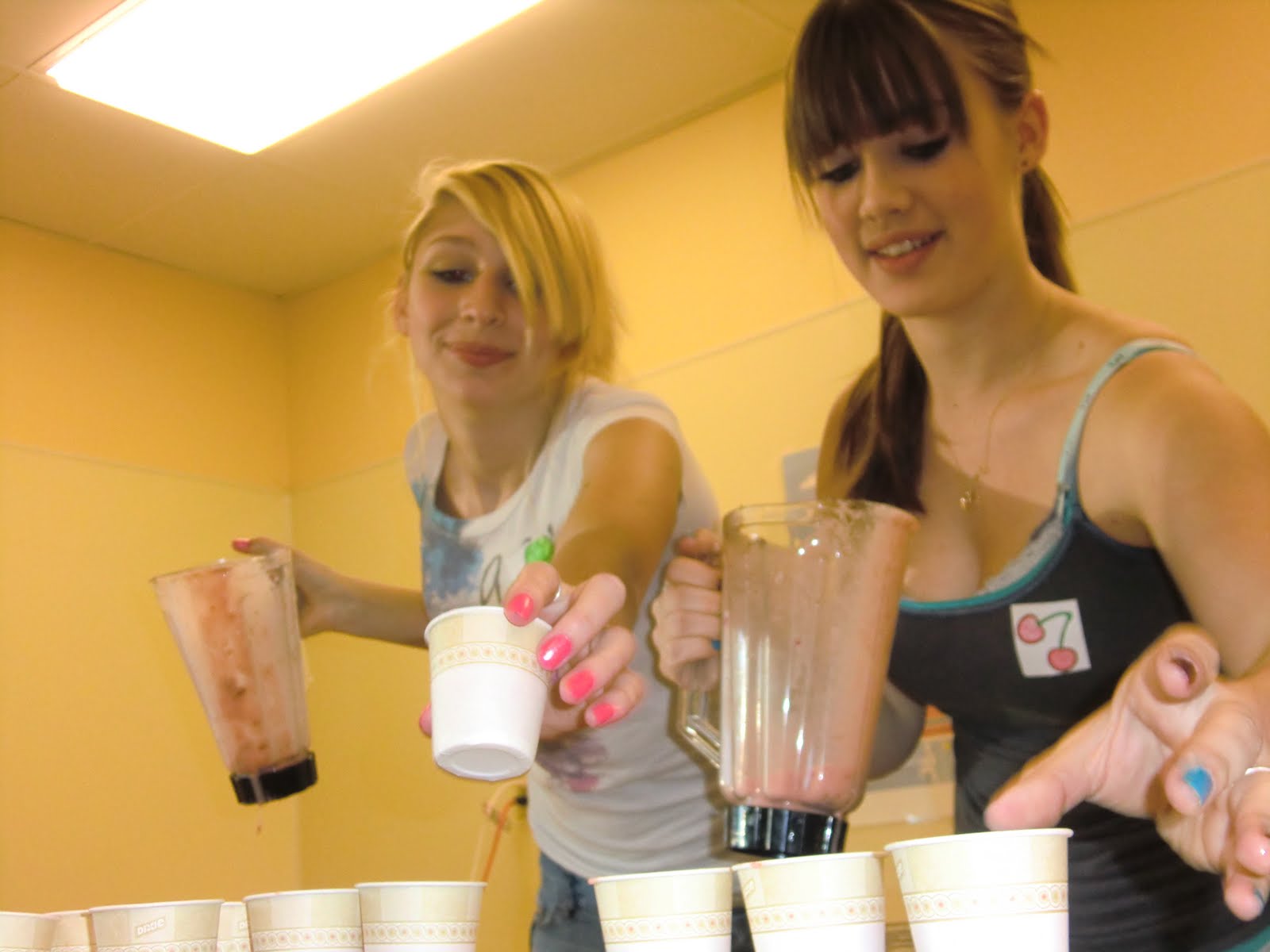
Great news in the world of health and nutrition! Story Number One: Kids will love their veggies. Here’s one way the BEANS (Better Eating, Activity, and Nutrition for Students) teen peer educators introduce lots of veggies to the pickiest of kids… Lettuce Tacos. First off, they get kids involved in the chopping and preparation. The peer educators ask the kids about edible parts of the plant... root, stem, leaf, flower, seed, fruit. Then they work together to chop, dice, and mince carrots (the root), red bell peppers (the fruit), cilantro (the leaf), celery (the stem), and broccoli (the flower). Even the littlest kids can break heads of broccoli into little florets. Add a few spices and some flavor with garlic, cumin, and chili powder, then sauté. Next, add the refried beans (the seed). Put this tasty mixture into a leaf of romaine lettuce and top with non-fat sour cream, salsa, and avocado. Eat it like a taco… Mmm, good! It’s a proven fact that when kids help grow and prepare vegetables that they will be more willing to eat them. Also, experience has shown us that adding vegetables to a kid favorite (like tacos or mac&cheese) is a great way to develop their taste for even more vegetables. Story Number Two: Grown-ups can change their habits. On a recent visit to the monthly meeting for the Foster Grandparent Program, I presented an example of nutrition and physical activity lessons that we share with local school children through the BEANS program. I am hoping that our healthy messages can be promoted by the greater community of grown-ups, and Foster Grandparents hold a lot of sway in the classrooms they visit, hence my visit to their meeting. Here’s what I did. I made the ever-popular Banana-Berry Pancakes for the Foster Grandparents to try. At the beginning of the presentation, I talked about the importance of incorporating fruits and vegetables into every meal, and that these pancakes were a great example of how to do this. Then I talked about reducing added sugars and fats, and said that we would be tasting today’s pancakes without syrup or butter… a few groans were heard in the room. The banana pancakes were cooked, the toppings of low-fat yogurt and fresh strawberries were put on the tables, and I demonstrated the “kid way” to eat the pancakes like a taco (no worries about sticky syrup or oily butter oozing out!). From what I could see, the Foster Grandparents quickly emptied their plates and sat back with satisfied smiles. During a break later in the meeting, one of the Grandparents approached me and told me her story. She said that when she heard my introduction (namely no syrup or butter) she decided that she wasn’t going to taste the pancakes. However, when they were served, she didn’t have a chance to say “no thanks” so she acquiesced and decided to give it a try. She ate half of her pancake, thinking that she probably wouldn’t like it. To her surprise, she did like it and ended up enjoying the whole thing. She assured me that she will incorporate this recipe into her repertoire and try to be more open about trying new foods. The Moral of These Stories: People LIKE healthy food done right... Do it in your kitchen tonight!

Straw bale Gardens?


Don't pay for a bunch of soil, grow soil! Don't pay for a bunch of water, save water! Urban agriculture has no excuse not to grow food because of the latest techniques used to create garden beds. At the Willits Integrated Service Center straw bales are the way to reclaim the land, provide an amazing example of urban gardening and produce food for community.

The theory is very simple. If there is space that has no soil, in our case the middle of our court yard, it is better to grow soil rather than paying a lot of money to bring soil in. The straw bales become raised garden beds that can be used to grow anything but a root vegetable. The bales will break down into a berm of soil as beautiful as a compost pile in two to three years. The Nutrients the plants need will come from a 1" layer of potting soil and other specific inputs put on top of the bale. The bale itself acts as a rooting medium that will hold moisture and uptake applied nutrients. The result is an instant raised two foot raised garden bed for less than $10!

The process is easy.

First, purchase or get donated straw bales that are as seed free as possible. Our 25 bales of straw were donated from J.D. Redhouse, the local feed store.
2. The bales have been induced with a high nitrogen organic fertilizer, in this case, chicken and sea bird manure and water from a soaker hose. Within one week the bales had reached a temperature of 70 degrees. The bales will heat up for about 1 month and get very heavy with water and reach temperatures of 140 degrees.
3. The bales will be given the specific type of input they need for the plants they are growing before they are planted in.
4. The 1" layer of potting soil on the top is not necessary but is suggested if direct seeding.
5. Plant the plants on top of the bales by digging a small hole in the soft top side of the bale.
6. Water the bales once a day at first and then as the plants are more established, watering can be cut back to once every two days or sometimes once three days depending on the weather. We will use a drip system, donated from Drip Works, that will apply the water exactly where it needs to go.
7. Harvest the food when it is ready.

We will repeat steps 5, 6, and 7, until the bales have turned to berms that create food for the people.

Come see our straw bale demonstration garden at 221 South Lenore Ave, Willits CA, 95490

peas and carrots,

Mason

Monday, March 28, 2011

A recipe for health!

The Cancer Resource Center is pleased to present this article to promote colorectal cancer awareness and prevention. This article will concentrate on prevention strategies focused on something we all enjoy - food! To discuss screening recommendations and options for colorectal cancer, please contact your health care provider. If you are seeking a health care provider, contact the Ukiah Valley Rural Health Center at 707-463-8000 or the Mendocino Community Health Clinic. For more information regarding colorectal cancer or any other cancer, please contact the Cancer Resource Center of Mendocino County by clicking on this link, or at 937-3833.


A nutritious diet is recommended beginning in childhood. It is not too late at any age, however, to make dietary changes as a way of reducing risk factors associated with colorectal cancer. The nutritional guidelines outlined in this article are reccommended prevention strategies in lowering your risk factors.

Using the following guidelines as your prevention strategy will not only reduce your risk for cancer, but also improve your general health

1. Eat a healthy diet emphasizing plant foods
- 5-9 servings of fruits and vegetables per day
- Limit meat, avoid processed meats, cured meats
- 3 servings of whole grains
-25- 40 grams fiber daily

2. Achieve and maintain a healthy weight.

3. Engage in at least 30 minutes of exercise 5 times per week

4. Get regular colon cancer screenings Studies show a reduced colon cancer risk from eating whole fruits, vegetables, grains, legumes, and nuts. Health promoting components in these whol foods and good food sources include:
- Phytonutrients- organic plants which can help protect the cells of the colon from damage.
- Fiber- indigestible part of fruits, vegetables, whole grain, legumes, nuts and seeds. Fiber helps move waste through the colon, and some types may help detoxify potential cancer causing substances.
- Cruciferous vegetables- contain anti- cancer properties thought to reduce colon cancer risk. Highest content is in broccoli, cauliflower, kale, cabbage, brussel sprouts, and radishes.
- Colon Protective Foods: Citrus fruits, berries, cantaloupe, papaya, pineapple, tomato, raw pepper, carrots, winter squash, yams, spinach, chard, whole grains, almonds, walnuts, peanuts, sunflower seeds, turmeric, ginger, curry.

Studies using supplements have not shown the same preventative benefits as eating whole foods for reducing colon cancer risk. There are probably other unknown benefits in whole foods still to be discovered.


Enjoy the following recipe!
Quinoa Salad with Corn and Black Beans

Ingredients
1 1/2 dry quinoa
1/3 cup finely diced red onion
1 can low sodium black beans
1 cup fresh or frozen sweet corn kernels, thawed
1 cup grape tomatoes

Vinaigrette

2 TBS olive oil
3 TBS lime juice
2 TBS water
1 fresh garlic clove
1 TBS cumin
1 tsp oregano
1 tsp chili powder
1 tsp sea salt
fresh pepper to taste

Directions
1. Cook quinoa according to package
2. While quinoa is cooking, prepare vinaigrette by combining ingredients and whisking in small bowl
3. In a large bowl combine cooked quinoa and remaining ingredients
4. Pour vinaigrette over qunioa mixture and combine

Serve and enjoy!


Thursday, March 24, 2011

Sharing The Bounty

April 10th is almost here and so is our annual fund raising dinner (also on April 10th..weird)

This years dinner is sure to be just as great (if not BETTER) than last year. This year you can expect to see some local grandiose grains, fervent foraged foods, luscious lemons, ruddy rhubarb, blistering black beans, wondrous wines, and other local ambrosial foods and wines that you might have no realized are from Northern California, let alone our county.

Haven't gotten your tickets yet? Contact our office: 462-2596 x 185 or email us here: kburwell@ncoinc.org. Hope to see you there!

Tuesday, March 22, 2011

Mendo's New Food Policy Council


It's official, Mendocino County has joined the growing number of communities around the country working together to build healthy, community-based, local food systems by creating a local Food Policy Council.

Thanks to the committed efforts of local food advocates in Public Health, The Gardens Project of NCO, School Nutrition coordinators, and many others, the Food Policy Council was born from the planning committee of Mendocino County's Local Food Summit in May of 2010. Seeing the need to continue collaborating and network to develop policies and practices that support a local food system, the group brought the following resolution to the County Board of Supervisors, Ukiah City Council, Fort Bragg City Council, and soon to Point Arena and Willits where they were unanimously approved! To find out more about the Mendocino County Food Policy Council, read Lucy's Something to Chew On article here or contact The Gardens Project.

NOW, THEREFORE, BE IT RESOLVED that the Mendocino County Board of Supervisors hereby recognizes and supports the establishment of an independent Mendocino County Food Policy Council, which will advise the Board on food and farming matters at least twice yearly. The Food Policy Council’s mission is to collaborate with institutions, businesses and the public at large to create a sustainable local food system that reduces hunger, increases health and expands economic vitality. The Food Policy Council will increase food security for all current and future generations, especially the least served, by ensuring the availability and accessibility of a wide variety of local, safe, sustainably-grown and nutritious foods.

Youth Engage and Initiate Policy Change

Twelve local teens from Willits and Ukiah volunteer for the BEANS program (Better Eating, Activity, and Nutrition for Students). They have been busy presenting interactive nutrition and cooking lessons to elementary and middle school students in their after-school programs since the fall of 2010. As the teen peer educators continue their weekly lessons to area students this spring, they have also begun to spend a couple hours a week doing research about access to healthy foods and opportunities for physically active play in our schools and in our towns.

The teens are approaching their research through a process called PhotoVoice. This process involves developing research questions, focusing the research on a manageable topic, teens using a camera to capture their perspectives about food and play access, a peer review of all photos, narrowing the photo selection down, then writing a reflection for each of their chosen photos. The process culminates in a presentation of the photos and essays. The BEANS teens want to make a difference; they want to use this project to initiate some policy change in our local communities.

Teens would like to make presentations of their PhotoVoice projects to their school boards, to the Mendocino County Board of Supervisors, to City Councils, and also to display their work at the Mendocino County Museum and/or the Mendocino County Library. If you have connections or ideas that will facilitate any of these presentations, please email Tarney Sheldon, BEANS coordinator, at sheldont@ncoinc.org .